
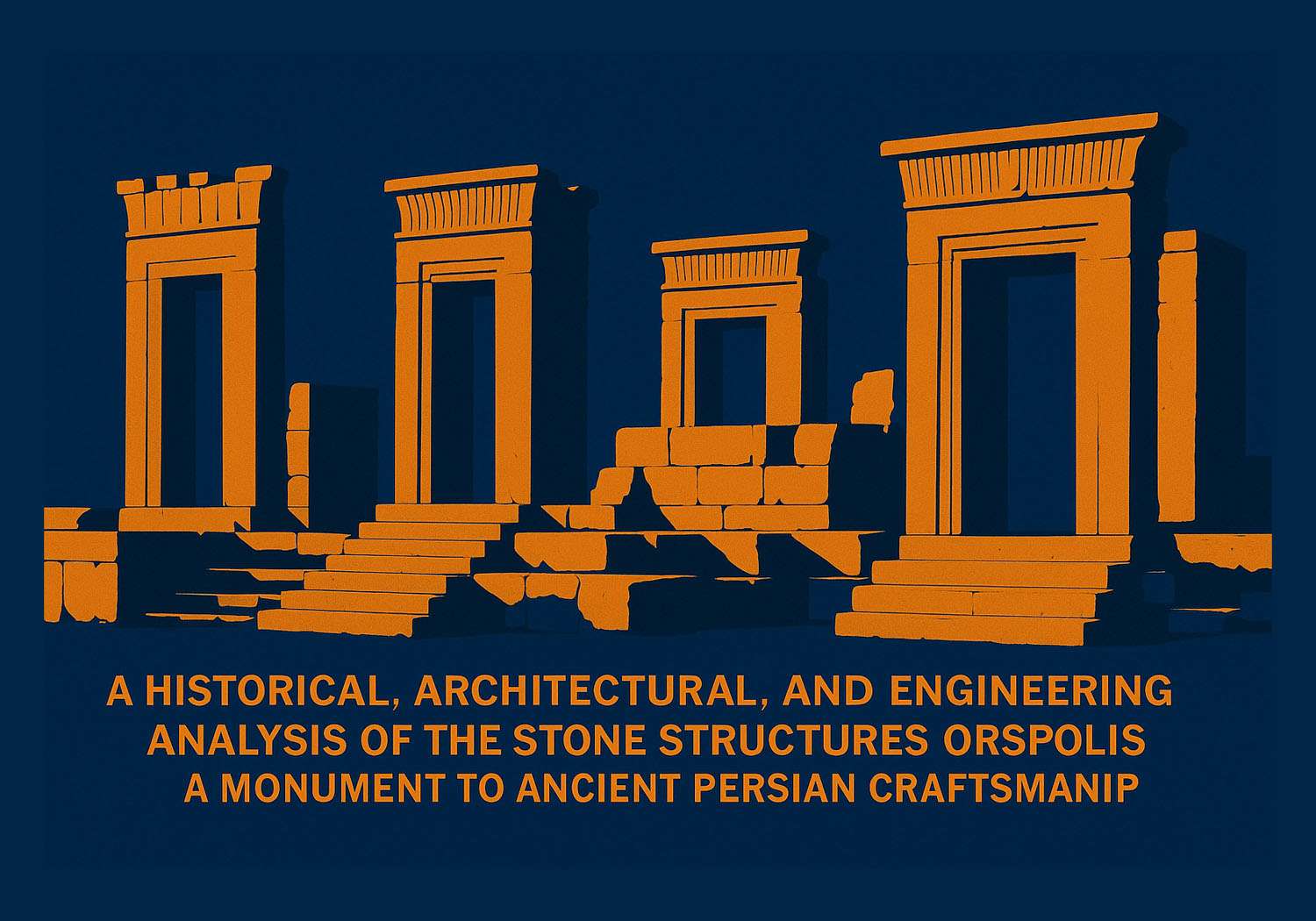
A Historical, Architectural, and Engineering Analysis of the Stone Structures of Persepolis: A Monument to Ancient Persian Craftsmanship
Abstract:
Persepolis, the ceremonial capital of the Achaemenid Empire, is one of the most outstanding examples of ancient stone architecture in Iranian and global history. This ancient complex, beyond its historical importance, showcases remarkable achievements in stone engineering, aesthetic design, spatial organization, and symbolic political representation. This article provides a comprehensive examination of the stone structures of Persepolis, including the origin and types of stones used, methods of quarrying, transportation and installation, carving techniques, structural composition of the platform, staircases, halls, and bas-reliefs. Cultural reflections, symbolism, and architectural influence on later periods are also discussed. The findings reveal that Persepolis stands as one of the most complete manifestations of the synthesis between art, technology, and political power in the stone architecture of the ancient world.
Introduction
Known to the Greeks as Persepolis, Takhte Jamshid was founded around 518 BCE by the order of Darius the Great. Located near Marvdasht in present-day Fars Province, it served as a ceremonial and administrative center for nearly two centuries. The architectural layout, particularly the extensive use of stone, demonstrates sophisticated knowledge in construction, artistic precision, and imperial symbolism.
Persepolis was not merely a palace complex; it was a visual expression of the Achaemenid worldview, imperial order, and the power of a multi-ethnic empire. This article analyzes the engineering and architectural achievements of Persepolis, focusing on its stone structures and design principles.
1. General Layout and Engineering Design
The main platform of Persepolis is an immense terrace rising approximately 15 meters above the surrounding plain. This platform was carefully constructed using massive limestone blocks, placed without mortar but with extraordinary precision.
The surface was leveled meticulously, and drainage systems were installed to prevent water accumulation. The builders implemented advanced techniques for weight distribution and earthquake resistance, showcasing a high level of structural awareness. The entire terrace covers about 125,000 square meters, supporting halls, gateways, palaces, and ceremonial staircases.
2. Types and Sources of Stone
The primary stone used in Persepolis is light to dark gray limestone, quarried from nearby Mount Rahmat. This limestone was ideal for carving and polishing due to its uniform texture and strength.
In decorative elements, other stones such as black marble-like stone (dark limestone), rare crystalline materials, and polished stones were used selectively in door frames, staircases, and sculptures. The harmonious use of different textures and tones contributed to the grand and orderly appearance of the complex.
3. Quarrying, Cutting, and Transportation Techniques
Archaeological evidence suggests that stone blocks were quarried using simple yet highly accurate tools such as iron chisels, hammers, hand saws, and polishing instruments. The precision of the dimensions and surfaces suggests a highly skilled workforce.
Once cut, the stones were transported using wooden rollers, sledges, and possibly carts drawn by animals. Grooves and notches found on some blocks indicate an organized system for lifting and maneuvering the stones into place. The smoothness of joints and the absence of mortar reflect masterful craftsmanship.
4. Structural Systems: Columns and Halls
One of the most iconic engineering feats of Persepolis is the Apadana Hall, which originally had 72 stone columns each over 20 meters tall. These columns consisted of several components: a base, a shaft, and a capital—each carved separately and assembled with remarkable accuracy.
The capitals were shaped like bulls or lions, not just for decorative purposes, but also to support the wooden beams of the roof. These structural elements were designed to distribute loads effectively and withstand seismic activity, demonstrating the Achaemenids’ advanced engineering knowledge.
5. Bas-Reliefs and Aesthetic Expression
Throughout Persepolis, intricate bas-reliefs adorn staircases and walls, depicting imperial themes such as tribute-bearing delegations from 23 nations, royal guards, mythological animals, and ceremonial processions.
Each figure is carved with fine details—from facial features and attire to gestures and symbolic objects—providing insight into the empire’s diversity and administrative order. These bas-reliefs are not only artistic marvels but also visual records of political ideology, cultural exchange, and state rituals.
6. The Gate of All Nations and Symbolic Architecture
The Gate of All Nations was a monumental entrance to the platform, guarded by two colossal stone bulls. These guardian figures represented strength and divine protection, aligning with Mesopotamian and Persian iconography.
This gate featured trilingual inscriptions (Old Persian, Elamite, and Akkadian), asserting imperial power and unity in a multilingual empire. The structure’s massive scale and intricate decorations underscored the empire’s commitment to grandeur and controlled symbolism.
7. Tools and Techniques in Stone Carving
Analysis of the carvings reveals the use of iron and possibly bronze tools like chisels, mallets, and polishing stones. The high level of detail achieved in features such as braided hair, muscle contours, and ornate garments suggests a collaborative effort by highly trained stone artisans.
Some scholars argue that advanced planning, including drawn blueprints and models, guided the execution of these works—an early example of architectural project management.
8. Inscriptions and Royal Ideology
Several stone inscriptions throughout the site detail the authority, divine legitimacy, and political philosophy of Achaemenid rulers. These inscriptions, carved in multiple languages, emphasize the inclusivity and administrative sophistication of the empire.
The trilingual format not only communicated to diverse audiences but also reinforced the king’s image as a universal ruler. The content often praises Ahura Mazda and invokes divine support for justice and order.
9. Cultural Legacy and Architectural Influence
The architecture of Persepolis influenced later periods, notably the Sasanian palaces and even elements of Islamic and modern Persian design. The modular use of space, high platforms, decorative column capitals, and symmetrical planning have echoed throughout Persian architectural history.
Moreover, Persepolis continues to inspire Iranian national identity and cultural pride, serving as a reference point for discussions on heritage, continuity, and art.
10. Destruction and Conservation
Persepolis was partially destroyed by fire during the invasion of Alexander the Great in 330 BCE, with additional damage over centuries due to natural erosion and human activity. Despite this, many structures, carvings, and foundations have survived.
Modern conservation efforts, including laser scanning, 3D modeling, and geotechnical analysis, aim to document, stabilize, and protect this heritage site. Preservation of stone structures under climatic and seismic conditions remains a key focus of multidisciplinary research.
Conclusion
Persepolis stands as a monumental testament to the brilliance of Achaemenid engineering, stone craftsmanship, and political symbolism. The precise use of durable stones, the sophisticated assembly of massive structures, and the integration of art and architecture reflect an unparalleled level of technical mastery.
Though scarred by conquest and time, Persepolis continues to tell the story of a civilization that valued order, divinity, and imperial unity. As a UNESCO World Heritage Site, it invites scholars, architects, and global citizens to learn from its enduring stone legacy.
🔗 https://whc.unesco.org/en/list/114

