
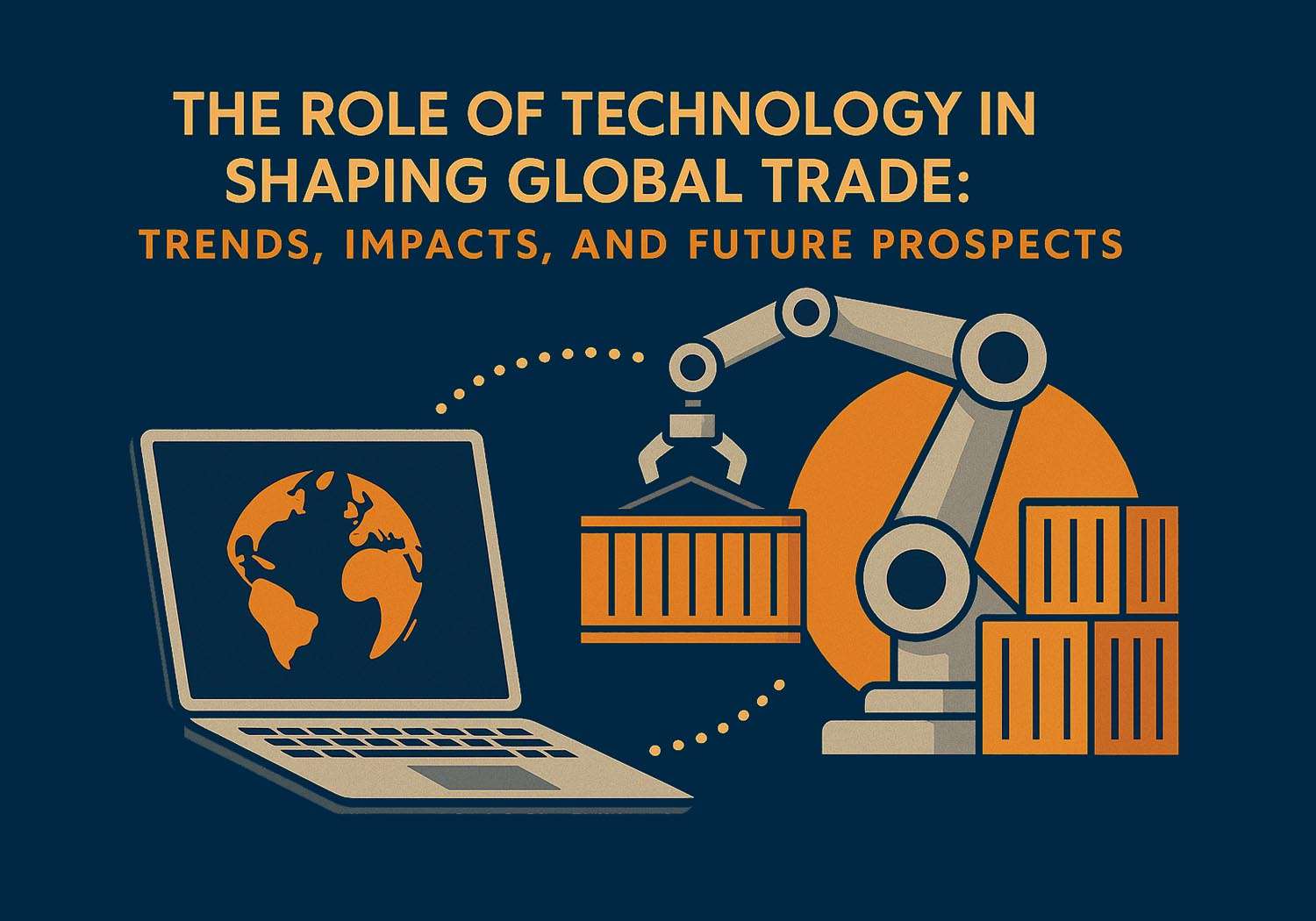
Abstract:
The advancement of technology, particularly in the fields of information, communication, logistics, and artificial intelligence, has profoundly transformed the structure and dynamics of global trade. This paper explores the multifaceted role of technology in enhancing productivity, reducing transaction costs, facilitating international communication, and creating new digital marketplaces. It also addresses the challenges associated with unequal access to technology and the dependencies it creates, especially for developing economies. Finally, policy recommendations are offered to foster an inclusive and sustainable approach to technology-driven global trade.
Keywords: Technology, Global Trade, Digital Innovation, Supply Chain, Automation, E-commerce
1. Introduction
In the 21st century, globalization is increasingly characterized by the pervasive influence of technological innovation. The integration of digital tools into international commerce has not only accelerated the pace of transactions but has also reshaped business models, market access, and consumer expectations. This paper aims to analyze how emerging technologies have impacted global trade and how these changes are likely to evolve in the coming decades.
2. Technological Advancements Enhancing Trade Efficiency
2.1. Automation and Artificial Intelligence Automation of production and logistics processes has drastically reduced human error, improved efficiency, and increased output. Artificial Intelligence (AI) enables predictive analytics, demand forecasting, and decision-making optimization in trade logistics and inventory management.
2.2. Cloud Computing and Big Data Cloud platforms and big data analytics allow businesses to store, process, and analyze vast amounts of trade-related data in real-time. These technologies enable better market intelligence, customer segmentation, and strategic planning.
2.3. Digital Payment Systems and FinTech The emergence of secure, efficient digital payment systems has significantly reduced cross-border transaction frictions. FinTech solutions offer alternatives to traditional banking, particularly benefiting SMEs in emerging markets.
3. Transformation of Global Supply Chains
3.1. Internet of Things (IoT) IoT devices track shipments and inventory, enhancing real-time visibility and responsiveness across supply chains. This results in lower costs, fewer delays, and improved customer satisfaction.
3.2. Blockchain Technology Blockchain provides decentralized, immutable records of transactions that enhance transparency and trust in cross-border supply chains. It is particularly useful for verifying product authenticity, ensuring compliance, and reducing fraud.
3.3. Smart Logistics and Autonomous Transport Drones, automated warehouses, and autonomous vehicles are beginning to reshape how goods are transported and delivered internationally. These innovations reduce labor costs and environmental impacts.
4. E-commerce and Digital Marketplaces
4.1. Global Platforms and SMEs Digital marketplaces like Amazon, Alibaba, and eBay have democratized global trade, allowing even micro-enterprises to reach international customers. These platforms reduce entry barriers and lower marketing and logistics costs.
4.2. Cross-border E-commerce Trends The rise of mobile commerce, social media marketing, and localized content has contributed to the exponential growth of cross-border e-commerce. Technologies like language translation and geo-targeting further facilitate this expansion.
5. Challenges and Digital Inequality
5.1. Digital Divide While advanced economies benefit from cutting-edge technologies, many developing countries lack the infrastructure and expertise to leverage digital trade tools effectively. This exacerbates existing economic disparities.
5.2. Cybersecurity and Data Sovereignty The increased digitization of trade raises concerns about data protection, cybercrime, and the sovereignty of national data policies. Businesses and governments must collaborate to establish secure digital trade frameworks.
5.3. Technological Dependence and Geopolitical Risks Reliance on foreign technology providers creates vulnerabilities, especially in the context of trade disputes or sanctions. Building domestic digital capacities is crucial for long-term economic resilience.
6. The Future of Technology-Driven Trade
6.1. Artificial Intelligence and Predictive Trade Future trade systems will increasingly rely on AI to anticipate market shifts, optimize pricing, and automate negotiations. Such developments can enhance efficiency but require ethical and regulatory frameworks.
6.2. Sustainable Technologies and Green Trade Technology will play a pivotal role in enabling sustainable trade practices, from carbon tracking tools to renewable energy-powered logistics. These innovations align with global climate goals.
6.3. Digital Trade Agreements As digital trade expands, international trade agreements must evolve to include provisions on data sharing, digital services, IP rights, and cybersecurity standards.
7. Conclusion
Technology has redefined the mechanisms and possibilities of global trade. While its advantages are undeniable in terms of efficiency, accessibility, and innovation, it also poses challenges that require strategic governance. Inclusive policies, international cooperation, and investment in digital capacity building are essential to ensure that the benefits of technology-driven trade are equitably shared. A forward-looking and adaptive approach to technology will be crucial in shaping the next era of globalization.
References
- Baldwin, R. (2016). The Great Convergence: Information Technology and the New Globalization. Harvard University Press.
- UNCTAD (2023). Technology and Innovation Report. United Nations.
- World Economic Forum. (2022). Shaping the Future of Trade and Global Economic Interdependence.
- OECD (2021). Digital Transformation and Trade. OECD Publishing.
- Schwab, K. (2017). The Fourth Industrial Revolution. World Economic Forum.

